Japanese vs English Pokémon Cards: Packs, Rarities, Master Sets
The Rundown
- Same game, two print runs: Japanese packs list at ¥200 for 5 cards, while Pokémon Center lists a 10-card English booster at $4.49.
- A Japanese set is a smaller target: Storm Emeralda is a 076-card main set plus 37 secret rares numbered up to 113/076, while one English expansion such as Perfect Order lists over 120 cards.
- Japan's art-focused rarities — AR and SAR — debuted in VSTAR Universe (Dec 2022) before the English game adopted equivalent Illustration Rares.
- Japan sells English cards only as thin imports: on September 21, 2026 Suruga-ya's English-version BOX search returned 20 results, 14 of them accessories rather than cards, and not one sealed English booster box.
- Japanese cards are usually cheaper outside the top chase tier, but importing adds a fixed block of cost that only pays off at around 31 packs per parcel.
- Mixed-language decks are legal only when the card backs match, so Japanese cards can't go into an English deck at Play! Pokémon events: the handbook treats their different backs as 'marked.'
Want a real number on a specific card? We check what it's listed for in Japan today. Send a want list →
Contents
- Japanese vs English Pokémon cards: what’s actually different?
- Does Japan sell English Pokémon cards?
- Do you get the same amount of rares in a Japanese vs English booster pack?
- What are the benefits of a full Japanese master set vs just the SRs?
- Are Japanese Pokémon cards more expensive than English ones?
- Japan’s rarity system: where AR and SAR come from
- Can you mix Japanese and English cards in a Pokémon tournament?
- Japanese or English Pokémon cards: which should you buy?
- Where to buy: Japanese Pokémon cards
Where to buy: Japanese Pokémon cardseBay(paid link)Mercari via Buyee(paid link)Yahoo! Auctions via Buyee(paid link)Fees and what to read first ↓
You’re staring at two versions of the same card, one Japanese, one English, and the Japanese copy is noticeably cheaper. Is it a knock-off? No. Japanese cards are the original print of every Pokémon TCG set, they’re cheaper for structural reasons (lower pack MSRP, routine reprints, a huge domestic market), and the real trade-off is tournament legality, not quality.
Japanese vs English Pokémon cards: what’s actually different?
Japanese and English Pokémon cards are the same game printed twice: identical attacks, HP and rules, published by two arms of the same company. What actually differs is the language, the card back design, the pack size and price, the rarity labels, and which sanctioned tournaments will accept them.
One thing to clear up first: plenty of collectors say “American Pokémon cards” when they mean English cards. There is no separate US print run, just one English-language release that ships to the US, the UK, Australia and the rest of that market. “Japanese vs American” and “Japanese vs English” are the same question.
| Japanese cards | English (“American”) cards | |
|---|---|---|
| Who prints them | The Pokémon Company / Creatures (original release) | The Pokémon Company International (localized release) |
| Cards per pack | 5 in a standard expansion pack | 10, plus 1 Basic Energy and 1 Pokémon TCG Live code card |
| Pack price | ¥200, published on the official product page | No published MSRP; Pokémon Center lists $4.49 |
| Booster box | 30 packs (150 cards) | 36 packs (360 cards) |
| Set timing | First — new cards debut here | Follows Japan; sets are combined and curated for the international release |
| Art rarities | AR / SAR (plus SR, UR, etc.) | Illustration Rare / Special Illustration Rare equivalents |
| Card back | Unique Japanese design | Shared by every non-Japanese language |
| Championship legality | Japan and TPC territories | Depends on your rating zone (details below) |
Does Japan sell English Pokémon cards?
Yes, but barely, and we counted it. On September 21, 2026 the two Japanese shops that openly sell English product held, between them, exactly one box-class English item and no sealed English booster box at all. Suruga-ya’s own “ポケモンカード 英語版 BOX” search returns 20 results, and 14 of those 20 are not cards: they are sleeves, dice and damage markers pulled out of English Elite Trainer Boxes and resold loose. Card Rush’s 133-listing overseas-version category had 4 items in stock, none of them English.
| Checked September 21, 2026 | What the listing count says | What was actually in stock | Price range |
|---|---|---|---|
| Suruga-ya, search “ポケモンカード 英語版 BOX” | 20 results | 17 (3 sold out), but 14 of the 20 are accessories, not cards | ¥160–¥2,500 for the accessories |
| Suruga-ya, English cards and sealed product only | 6 of those 20 | 5: four English singles plus one secondhand Terapagos ex Ultra-Premium Collection | ¥160–¥220 for the singles, ¥25,800 for the collection |
| Card Rush, 【海外版】 “overseas version” | 133 listings | 4, none of them English (two Korean promos, two sleeve products) | ¥7,480–¥25,800 |
| Sealed English booster boxes, both shops combined | n/a | None | n/a |
The first row is the whole answer. A search whose own keyword is “BOX” returns twenty things, and most of them are a die, a damage marker or a sleeve taken out of an Elite Trainer Box: Champion’s Path ETB sleeves at ¥800, a Brilliant Stars VSTAR marker at ¥160. The one genuine box was a used overseas-Pokémon-Center exclusive, the Terapagos ex Ultra-Premium Collection, at ¥25,800.
“Overseas version” also does not mean English. Of Card Rush’s 133 listings, 62 are Chinese-language, 43 are labelled English, 3 are Korean and the rest carry no language tag, so the biggest single group at a Japanese shop’s overseas counter is Chinese product. Every one of those 43 English listings was sold out when we checked.
One limit: Pokémon Center Online’s keyword search returned nothing even for control terms, so we could not audit the official store item by item. Treat “official Japanese channels stock the Japanese-language game” as a long-standing assumption, not something we re-verified.
Do you get the same amount of rares in a Japanese vs English booster pack?
Nobody can tell you, because neither The Pokémon Company nor The Pokémon Company International publishes pull rates for any set. What is published is pack size: a standard Japanese expansion pack holds 5 cards for ¥200, and an English booster holds 10 cards plus a Basic Energy and a Pokémon TCG Live code card.
| Japanese standard expansion | English expansion | |
|---|---|---|
| Cards per pack | 5 (other Japanese products use 6, 7 or 10) | 10 + 1 Basic Energy + 1 code card |
| Packs per box | 30, printed on the Pokémon Center Online listing | 36 in the standard booster display |
| Cards per box | 150 | 360 |
| Published pull rates | None | None |
| Per-box “floor” talk | Common among Japanese shops and buyers | Not a market convention |
The per-box floor is what fills the silence in Japan. Thousands of opened boxes have settled into a pattern, roughly one SR plus several ARs in a standard 30-pack box, that shops treat as near-fact. It is a community observation, not a publisher promise, and the English market never developed an equivalent. So the honest comparison is structural: a Japanese pack is half the cards at a lower, fixed price, which makes a Japanese box cheaper to open but not provably richer per pack. What a box does and doesn’t guarantee is in Japanese booster box guaranteed pulls.
Sets also aren’t 1:1 across languages. Japan often releases two smaller sets that the English game later merges into one, with secret-rare numbering reshuffled, which is why “the same card” can carry different set numbers in each language.
What are the benefits of a full Japanese master set vs just the SRs?
A Japanese master set is a smaller, clearly bounded target, and the official numbering tells you exactly where the chase starts. In Storm Emeralda (ストームエメラルダ), the main set is 076 cards and 37 more are numbered past it, up to 113/076. Collecting “SRs and up” means 25 of those 37; the full master set adds the 76 main-set cards and 12 ARs.
Here is how the official card database splits that set (checked October 5, 2026):
| Numbers | Rarity | Cards |
|---|---|---|
| 001–076/076 | Main set | 76 |
| 077–088/076 | AR | 12 |
| 089–106/076 | SR | 18 |
| 107–112/076 | SAR | 6 |
| 113/076 | MUR (gold Mega Rayquaza ex) | 1 |
The case for going full set in Japanese is that the extra cards sit in the cheapest part of the market: main-set cards make up most of every ¥200 pack, so they are the most plentiful cards in the set, while the cost of any master set concentrates in the 25 SR-and-up cards either way. The case for SRs only is that those 25 are the art you are actually buying the set for. One English expansion, by contrast, lists over 120 cards on its official page (Perfect Order), and because English sets often merge two Japanese ones, an English master set can span what Japan sold as two.
Check for variant prints before you commit. The official Pokémon Card 151 page advertises Poké Ball-pattern mirror cards in addition to the normal ones, so a 151 master set includes them; the official pages for the standard MEGA expansions M2 to M6 advertise no mirror versions. Rarity codes are decoded in SAR, AR, UR: the Japanese rarity system explained.
💡 Set codes are your friend
Every Japanese card carries a set code (like M6) and a collector number at the bottom. Anything numbered above the set count (110/076) is a secret rare. Search the code plus the number and you'll find the exact card, and its English twin, without reading any Japanese.
Are Japanese Pokémon cards more expensive than English ones?
No. They’re normally the cheaper side, not the pricier one. A Japanese pack lists at ¥200 for 5 cards against $4.49 for a 10-card English booster at Pokémon Center, and Japanese singles below the top chase tier are usually cheaper too. The gap shrinks once you import, because proxy fees, packing and postage add roughly ¥6,150 of fixed cost per parcel — overhead that only stops dominating the order at around 31 packs bought at once.
🗼 Pricing the gap on your card
The Japanese price advantage above is a shelf price in Japan — by the time a specific card reaches your door, fees and postage have eaten some part of it you can't know in advance. Tell us the exact card and your country and the desk checks the live Japanese listings, then sends back a free report with the yen price and an all-in estimate including proxy fees and shipping. The landed number, not the shelf number. Hold it against the English copy where you live and decide. You buy directly from the links; our job is finding the best way to buy it from Japan and telling you, including when that answer turns out to be "buy the English one at home".
Get a free report on that card →
The Tokyo Sourcing Desk is our own free service. Editorial policy.
Japanese prices sit lower because of how the market is built, not because the cards are lesser products:
- Low, published pack pricing. A ¥200 suggested retail price per pack, printed on the official product page and broadly honored by retailers, keeps the cost of ripping product low, which means more cards opened, and more supply of every single card.
- Official reprints are routine. The Pokémon Company announces additional production runs when sets sell out; one 2025 notice scheduled extra shipments of “Black Bolt” and “White Flare” over several months. Sustained reprinting caps how scarce recent sealed product can get.
- A dense domestic singles market. Hundreds of card shops compete on tight margins with prices posted and updated constantly, which pushes singles prices down.
The exception is the top of the market: grails with heavy international demand are priced by a global pool of buyers looking at the same comps, so they land close in both languages. The full landed-cost arithmetic is in is it cheaper to buy Pokémon cards in Japan than in the US?, and the route is in how to buy Japanese Pokémon cards from overseas.
Japan’s rarity system: where AR and SAR come from
Japan is where the art-focused rarity push started. AR (Art Rare) and SAR (Special Art Rare) debuted in the Japanese high-class pack VSTAR Universe in December 2022. The official site ran interviews with the 16 illustrators behind the first wave. The English game followed with its own names: Illustration Rare for AR, Special Illustration Rare for SAR. Same art, different label. One naming trap: Japanese SR corresponds to the English Ultra Rare.
Because Japan ships these sets first, Japanese versions circulate months before the English release, which makes them a preview of the coming English game. Our JP release calendar tracks that.
Can you mix Japanese and English cards in a Pokémon tournament?
No. The Play! Pokémon handbook allows mixed-language decks “so long as the backs are consistent,” and Japanese cards fail that test: the handbook counts them as marked because their backs differ from every other language’s.
So an English deck with a few French or Spanish cards can be legal where those languages are; an English deck with one Japanese card is not. On top of that, Championship Series events limit legal languages by rating zone. Per the TCG Tournament Handbook (revised September 1, 2026):
| Rating zone | Legal languages at Championship Series events |
|---|---|
| US and Canada | English (French also legal in Canada) |
| Latin America | English, Spanish (Portuguese in eight countries, including Brazil) |
| Europe | English, French, German, Italian, Portuguese, Spanish |
| Oceania | English |
| Russia | English, Russian |
| Middle East and South Africa | English |
Japanese is not on any of those lists.
⚠️ Don't build your competitive deck out of Japanese cards
If you play sanctioned events in the US, Canada, Europe, or Oceania, Japanese cards are not legal at Championship Series events. The handbook treats their different card backs as marked cards. Buy your tournament staples in a legal local language and keep the Japanese copies for your binder.
The mirror image applies in Japan, where domestic events accept only Japanese-language cards — details in Champions League 2027 Yokohama. Two exceptions exist elsewhere: at World, International and Regional Championships you may use English plus any language legal at home, and at local leagues legality is the organizer’s call. Ask before you show up with a Japanese deck.
Japanese or English Pokémon cards: which should you buy?
📚 Collector / binder builder
- Japanese versions are cheaper for most singles and sealed
- You get the art months before the English release
- AR/SAR originals from the source market
- Language on the card rarely matters in a binder
⚔️ Competitive player (outside Japan)
- Buy staples in a language legal in your rating zone
- Japanese copies can't enter Championship Series decks
- Casual/league play depends on your organizer
- Use Japanese sets to preview the coming meta, not as deck stock
Most people land on a hybrid: local-language cards for anything that touches a tournament table, Japanese cards for the collection. Planning a trip? Tokyo’s card shops are the cheapest way to buy Japanese singles in person.
Frequently asked questions
What's the difference between Japanese and American Pokémon cards?
There is no separate American print run — 'American cards' is what collectors usually mean by the English-language release, which is the same product sold in the US, the UK, Australia and the rest of the English market. Against Japanese cards, the differences are language, card back design, pack size and price, rarity labels, and tournament legality. The game rules and the cards themselves are identical.
Is it better to buy Japanese or English Pokémon booster packs as a collector?
For a binder or a display, Japanese is usually the better value per pack and you get the art months earlier: a standard Japanese pack is 5 cards at a publisher-set ¥200, an English booster is 10 cards plus a Basic Energy at a retailer-set price. If they're going into a deck for a sanctioned tournament outside Japan, buy them in a language legal in your rating zone, because Japanese cards can't enter Championship Series decks. Plenty of collectors run both: local-language playables, Japanese collection.
Are English Pokémon cards cheaper in Japan than at home?
No. This is the one direction where Japan is the expensive market. English cards arrive as imports carried by a handful of shops, so they are priced on scarcity, not on retail supply. The scale of that scarcity is the point: on September 21, 2026 the only English box-class item Suruga-ya had in stock was a secondhand Terapagos ex Ultra-Premium Collection at ¥25,800, and Card Rush had zero English listings in stock at all. Japanese-language cards are the ones Japan prices cheaply.
Can I buy English Pokémon cards at a Pokémon Center in Japan?
Plan on no. Pokémon Center stores and Pokémon Center Online sell the Japanese-language game, and every English item we counted on September 21, 2026 sat in the secondhand and hobby trade instead: Suruga-ya and Card Rush, not official retail. We could not read Pokémon Center Online's card catalog item by item, so treat this as where the English stock actually is rather than as an official statement that they never carry any.
Are English Pokémon cards worth more than Japanese ones?
Often, below the top tier, and for structural reasons rather than quality: Japan's ¥200 pack price, routine reprints and a dense domestic singles market keep Japanese supply high and prices low. At the very top the gap narrows, because grails in either language are priced by the same global pool of buyers. Language does change value, but card by card, so compare the two current prices for the exact card rather than assuming either way.
What is the difference between Japanese, Korean and English Pokémon cards?
All three are official prints of the same game. Japanese cards have their own card back; the tournament handbook says Japanese backs differ from those of all other Pokémon cards, so Korean and English cards share the international back. Neither Japanese nor Korean appears on the handbook's legal-language lists for its six rating zones (US and Canada, Latin America, Europe, Oceania, Russia, Middle East and South Africa), although at Regional, International and World Championships players may also use any language legal in their home country.
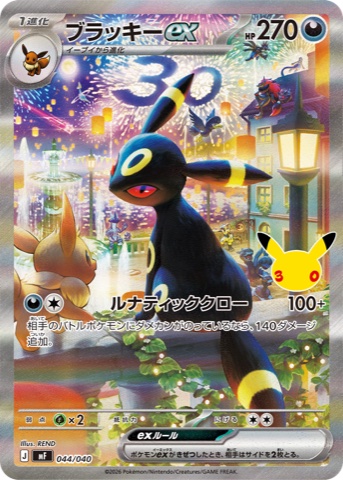 30th CELEBRATION Premium Deck Set Price in Japan: ¥18,000 vs ¥6,200
  Ninja Spinner Card Prices in Japan: Mega Greninja ex MUR at ¥59,800
  Abyss Eye Card Prices in Japan: Mega Darkrai ex MUR at ¥34,800
 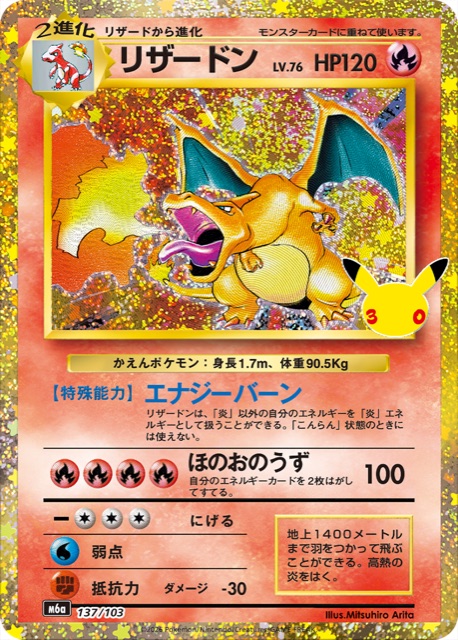 30th Celebration Classic Collection: Why Charizard & Lugia Doubled