Japanese Booster Box Guaranteed Pulls: Hits, SARs and Packs
The Rundown
- The Pokémon Company guarantees no hits in any Japanese booster box. Its pages print only the configuration and the line that cards are inserted at random.
- The hits called guaranteed are a floor reported by box openers: 1 SR or better, 3 ARs and 4 RRs in a 30-pack Storm Emeralda box, and 1 SAR in a 10-pack Terastal Festival ex box. Collector reports, not promises.
- No Japanese box carries an official SAR guarantee. In 30-pack boxes an SAR is an upgrade of the SR slot, and god packs are a rare bonus no one can promise.
- Packs per box, verified on Pokémon Center Online on October 20, 2026: 30 packs of 5 for a standard expansion (¥6,000 for Storm Emeralda), 10 packs of 10 for a high class pack (¥5,500), 20 packs of 6 for 30th CELEBRATION (¥7,200).
- One Piece OP-17 is 24 packs of 6 cards at ¥5,760 on Premium Bandai, and Bandai guarantees nothing inside it either.
Want a real number on a specific card? We check what it's listed for in Japan today. Send a want list →
Contents
- How many guaranteed hits are in a Japanese booster box?
- Do Japanese booster boxes have a guaranteed SAR?
- What are the pull rates for a Japanese booster box?
- How many packs are in a Japanese booster box?
- How much are booster boxes in Japan?
- Are you guaranteed anything in a One Piece booster box?
- Why do English booster boxes feel more random?
- Where to buy: sealed Japanese booster boxes
Where to buy: sealed Japanese booster boxeseBay(paid link)Mercari via Buyee(paid link)Yahoo! Auctions via Buyee(paid link)Fees and what to read first ↓
Sellers advertise Japanese boxes by their “guaranteed pulls,” and most pages explaining why get two basic facts wrong. Japanese boxes do carry a consistent per-box floor of hits, but the word is documented, not official. The Pokémon Company publishes no pull rates for any Japanese set, and no packs-per-box count on its set pages either.
Which question brought you here?
- How many hits per box: guaranteed hits by box type, with packs, cards and price.
- SARs and god packs: is an SAR guaranteed?
- Pull rates or odds: what is published.
- One Piece: what a One Piece box guarantees.
- One specific set (30th CELEBRATION, Storm Emeralda, MEGA Dream ex, OP-17): Japanese booster box guarantees by set.
How many guaranteed hits are in a Japanese booster box?
Officially, zero: The Pokémon Company states that cards are inserted at random and publishes no per-box guarantee for any Japanese set. Box openers report a steady floor instead, such as 1 SR or better, 3 ARs and 4 RRs in a 30-pack Storm Emeralda box, and 1 SAR in a 10-pack Terastal Festival ex box.
The publisher columns below come from Pokémon Center Online and Premium Bandai box listings, rechecked October 20, 2026. The last column is a collector report compiled by The Trainer Court (updated August 7, 2026), not anything a publisher printed.
| Box (set type) | Packs per box | Cards per pack | Box price (official store) | Floor reported by box openers (not official) |
|---|---|---|---|---|
| ストームエメラルダ Storm Emeralda (standard expansion) | 30 | 5 | ¥6,000 | 1 SR or better (can be SAR or MUR), 1 Item SR, 3 AR, 4 RR |
| ナイトワンダラー Night Wanderer (enhanced expansion) | 30 | 5 | ¥5,400 | 1 SR or better (can be UR or SAR), 1 ACE SPEC, 3 AR, 4 RR |
| テラスタルフェス ex Terastal Festival ex (high class pack) | 10 | 10 | ¥5,500 | 1 SAR, 1 ACE SPEC, 9 RR, 3 reverse holos |
| MEGAドリーム ex MEGA Dream ex (high class pack) | 10 | 10 | ¥5,500 | 1 Mega Attack Rare, 1 SR or better, 1 Item SR, 3 AR |
| 30th CELEBRATION (special expansion) | 20 | 6 | ¥7,200 | Publisher guarantee instead: 1 × 30th-anniversary Pikachu and 1 × basic Energy in every pack |
| 世界最強の戦士 OP-17 (One Piece booster) | 24 | 6 | ¥5,760 (Premium Bandai) | No consistent tally we can source |
So when someone asks how many guaranteed hits a Japanese box has, the honest answer has two halves. On paper, none, with one partial exception: 30th CELEBRATION is the only box whose listing names cards in writing, and those are a Pikachu and an Energy, not a rarity. In practice, a factory-sealed 30-pack box reliably yields about nine hits of RR or better (1 SR or better, 1 Item SR or ACE SPEC, 3 AR, 4 RR), because the floor above has held across a large number of opened boxes. You cannot claim a missing SR from anyone.
Do Japanese booster boxes have a guaranteed SAR?
No. No Japanese Pokémon or One Piece box carries an official SAR, SIR or Secret Rare guarantee. Openers report about 1 SAR per 10-pack Terastal Festival ex box, but in 30-pack boxes like Storm Emeralda an SAR is only an upgrade of the SR slot, so one box can hold two and the next none.
That slot structure explains most “guaranteed SAR” listings. Every pack has a slot that usually lands low and occasionally upgrades, so across 30 packs you get a stable floor and an unstable ceiling. Buy the floor, treat the ceiling as luck, and remember the floor is a market convention, not a spec you can hold anyone to. A listing promising an SAR is repeating somebody’s tally in the grammar of a promise. Anyone pricing a purchase around one named SAR is gambling, and the open-market price of a sealed box is set by other people making that same bet.
God packs sit on top of all this. A god pack is a single pack where every card, or all but one, is a hit, and collectors have reported them in sets such as 151, Terastal Festival ex and MEGA Dream ex. The Pokémon Company has never acknowledged them, and the most quoted frequency, around 1 in 600 packs, is an unofficial estimate. Which sets have them and what the cards sell for is in Japanese Pokémon god packs.
What are the pull rates for a Japanese booster box?
There are none. The Pokémon Company publishes no pull rates, no hit rates, no insertion ratios and no booster box odds for any Japanese set, in any product line. A guarantee is a floor set by how the box is built. A pull rate is the probability of one named card landing in one pack, and only the first is ever documented.
| What you asked for | What the word means | Official number? |
|---|---|---|
| Guaranteed pulls | A floor set by how the box is built | Yes for the configuration: packs, cards, price. No for rarity, with one exception |
| Pull rates, hit rates, odds | The chance of a card or rarity in a pack | No. Never published for any Japanese set |
| Hits per box | A count collectors aggregate after opening | Not official. Community tallies converge on a floor |
A page quoting a “1 in N packs” SAR figure as an official rate is wrong about the word official, whatever the number’s merits. It may be a careful tally of thousands of openings; it is not a disclosure. The same goes for Pokémon Card 151: its set page gives ¥290 for 7 randomly inserted cards, released June 16, 2023, and we found no current Pokémon Center Online listing for its box, so no official pack count exists for it now either. When the publisher does want to promise something, it writes it down, as it did for 30th CELEBRATION and for the Premium Trainer Box MEGA page (10 packs plus 10 packs). Read the silence on rarity odds as silence.
How many packs are in a Japanese booster box?
Thirty packs of 5 cards for a standard expansion box, 10 packs of 10 for a high class pack box, and 20 packs of 6 for 30th CELEBRATION, as in the table above. The Pokémon Company prints this on its own store listings, never on the set page.
Official set pages never mention a box, so an English page citing pokemon-card.com for a pack count is citing a claim that isn’t there. The number lives on Pokémon Center Online, inside the 商品詳細 block of each box listing, as 1BOX=◯パック. Cards per pack is the one number the set page does print: 5 for a standard expansion pack, 6 for 30th CELEBRATION, 7 for the Pokémon Card 151 enhanced expansion pack, 10 for a high class pack. A full Japanese box therefore holds 100 to 150 cards. The type label alone won’t settle it, since two listings labeled 拡張パック hold 30 and 20 packs (Japanese product type guide). Box weight matters for shipping: a 30-pack box is 300 g before packing, inside Japan Post’s up-to-1kg band (shipping cost breakdown).
🗼 The cheaper way to one card
If there is one specific SAR you want, no box structure delivers it. That's what the floor-versus-ceiling split above means. Send us the card instead of the box: the desk checks what that single is going for in Japanese shops and marketplaces right now and sends back a free report with the specific listings we would pick, the yen price, condition notes, and an all-in estimate including proxy fees and shipping. It prices sealed product alongside the single so you can see the two side by side, which for a named card usually settles it. You buy directly from the links; our job is finding the best way to buy it from Japan and telling you.
Get a free report on the card →
The Tokyo Sourcing Desk is our own free service. Editorial policy.
How much are booster boxes in Japan?
¥5,400 to ¥7,200 at The Pokémon Company’s own store, depending on the product line, and every one of those figures is the pack price multiplied by the pack count. What an overseas buyer can actually pay is a different number: sealed Storm Emeralda boxes asked ¥19,800 to ¥34,980 on Yahoo! Shopping on August 6, 2026, median ¥25,000.
💡 The box price is the pack price times the pack count, exactly
¥200 × 30 = ¥6,000 for Storm Emeralda. ¥550 × 10 = ¥5,500 for MEGA Dream ex. ¥360 × 20 = ¥7,200 for 30th CELEBRATION. The official store applies no box discount and no box premium, which is the cleanest evidence that a "box MSRP" is arithmetic on the one published number rather than a separate manufacturer price.
The catch is that a Japanese store price is an allocation price, not a shelf price: Pokémon Center Online ran Storm Emeralda as a lottery. The workings are in Storm Emeralda box price in Japan; whether importing wins at all is run in Japan vs US card prices.
Are you guaranteed anything in a One Piece booster box?
No, nothing beyond the configuration. A Japanese OP-17 box is 24 packs of 6 cards, 144 cards, sold at ¥5,760 on Premium Bandai, Bandai Namco’s own store, and Bandai publishes no guaranteed Secret Rare, Leader, rarity or pull rate for it.
The OP-17 set page gives ¥240 per pack, 6 cards per pack and a rarity census, then the same line Pokémon uses: 「カードはランダムに封入されています」, cards are inserted at random. The census counts how many card types exist (three Secret Rares, for example), not how many land in your box. The 24-pack count comes from the Premium Bandai listing, 販売単位:1BOX(24パック入り), and exactly matches ¥240 × 24. Don’t carry pack sizes across products: Bandai’s English page for Extra Booster EB-01 prints 12 cards per pack and 24 packs per box. The open-market price and the next boxes are in the Japanese One Piece booster box breakdown.
Why do English booster boxes feel more random?
Because the market talks about them differently, not because a publisher documented more. TPCi publishes no pull rates either, and the English market never settled on a floor convention.
| Japanese standard expansion box | English booster box | |
|---|---|---|
| Packs per box | 30, printed on the official store listing | 36 in the standard retail configuration |
| Cards per pack | 5 | 10 |
| Pack price | ¥200, published by the publisher | Set by retailers |
| Published pull rates | None | None |
| Per-box “floor” language | Used by shops and the resale market | Not a market convention |
| Tournament-legal in the West | No | Yes |
The Japanese floor is readable partly because of structure. The publisher sets the pack price, so boxes are comparable; a five-card pack makes the hit slot easy to isolate; and Japanese shops sell single boxes to repeat customers who post their results, so a claim that drifts gets corrected fast. For a collector chasing art cheaply per pack, that documented floor is the appeal. For a player in the West, the English box also buys tournament-legal cards, which Japanese product can’t (JP vs EN cards).
⚠️ The resealed-box problem
A known per-box floor is exactly what makes weighing and "mapping" boxes worth a searcher's time, then resealing what's left. Read the Japanese shrink label before the price: シュリンク付き means the factory wrap is on, シュリンクなし means it's gone. The floor only holds if the box is untouched.
The short version: the pack count comes from a store listing, the floor comes from collectors, and the pull rates come from nobody at all. Buy sealed for the floor, never as a bet on a specific pull.
Frequently asked questions
What are you guaranteed in a Japanese booster box?
The configuration, and normally nothing more: the number of packs, the number of cards in each pack, and the printed statement that insertion is random. The one current exception is the MEGA expansion pack 30th CELEBRATION, where the official listing states that one of the six cards in every pack is a 30th-anniversary Pikachu card and one is a basic Energy card. No Japanese product is sold with a guaranteed rarity.
Do Japanese booster boxes have a guaranteed SAR?
No. Neither The Pokémon Company nor Bandai guarantees an SAR, SIR or Secret Rare in any Japanese box. Openers report about 1 SAR per 10-pack Terastal Festival ex box, but in 30-pack boxes such as Storm Emeralda an SAR only appears when the SR slot upgrades, so one box can hold two and the next none. God packs exist but are unofficial and never promised.
How many packs are in a Pokémon booster box?
A Japanese standard expansion box is 30 packs of 5 cards, a Japanese high class pack box is 10 packs of 10, and the 30th CELEBRATION box is 20 packs of 6, all printed on the Pokémon Center Online box listings. An English booster box is 36 packs of 10 cards in the standard retail configuration.
How many cards come in a Japanese Pokémon pack?
Five in a standard expansion pack such as Storm Emeralda, at ¥200 including tax. Other lines differ: 30th CELEBRATION packs hold 6 cards at ¥360, the Pokémon Card 151 enhanced expansion pack held 7 at ¥290, and high class packs hold 10 at ¥550. The cards-per-pack figure is the one number The Pokémon Company does print on its own set pages.
Which Japanese Pokémon sets have the best pull rates?
Nothing published lets you rank them. The Pokémon Company has never released insertion rates for any Japanese set, so a list of sets ordered by pull rate is really a list ordered by somebody's opening tallies. What does differ set to set, and is published, is the configuration: cards per pack, packs per box and the pack price. That is the only part you can compare honestly.
What are the pull rates for a Japanese 151 booster box?
There are none in any official sense. The Pokémon Company has never published insertion rates for Pokémon Card 151 or any other Japanese set, and we could not find a current Pokémon Center Online listing for the 151 box either, so no official packs-per-box figure is available for it now. What is official is the pack itself: ¥290 for 7 randomly inserted cards, released June 16, 2023.
Do Japanese Pokémon packs have better pull rates than English ones?
There is no way to compare them numerically, because neither The Pokémon Company nor TPCi publishes pull rates. What you can compare is structure and price: a Japanese pack is 5 cards at a publisher-set ¥200, an English pack is 10 cards at a retailer-set price, and the art rarities collectors chase appear in Japanese sets first. Any table comparing JP and EN percentages is comparing two sets of private tallies.
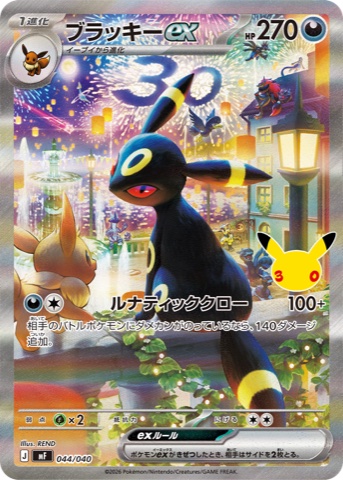 30th CELEBRATION Premium Deck Set Price in Japan: ¥18,000 vs ¥6,200
  Ninja Spinner Card Prices in Japan: Mega Greninja ex MUR at ¥59,800
  Abyss Eye Card Prices in Japan: Mega Darkrai ex MUR at ¥34,800
 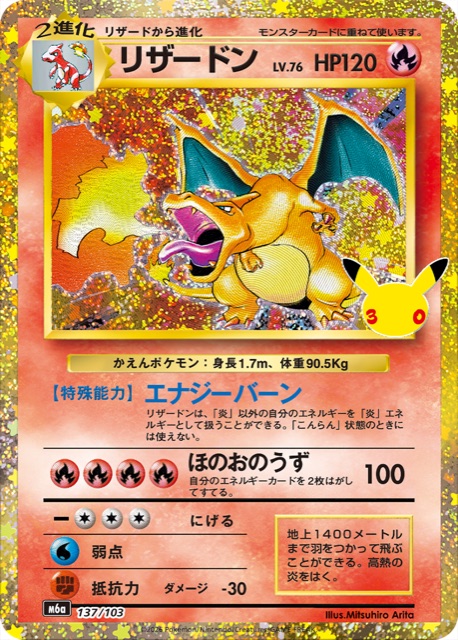 30th Celebration Classic Collection: Why Charizard & Lugia Doubled