How to Spot a Fake Japanese Pokémon Card Before You Buy
The Rundown
- Counterfeits cluster where the money and the blind spots are: high-value single cards and sealed product a buyer can't inspect before paying.
- No single physical test proves a card is real — the reliable method is side-by-side comparison against a card you know is genuine from the same set and era.
- Mercari Japan bans counterfeits and items that can't be confirmed genuine, and runs its own Anshin Kantei authentication for single cards, including cards already in PSA, BGS, CGC, SGC, ARS, CGS, VSS or TAG slabs.
- PSA states outright that verifying a cert number does not eliminate risk, because counterfeit grading inserts can reuse real cert numbers from public sources.
- Buyee's ¥300 photo service gets you 5 photos per package, but you cannot request angles — treat it as a sanity check, not authentication.
Want a real number on a specific card? We check what it's listed for in Japan today. Send a want list →
Contents
You’re buying a card you can’t hold, from a listing you can’t fully read, through a proxy that won’t inspect it for you. The good news: counterfeits concentrate in a narrow band of products, and most of them fail a careful side-by-side comparison against a card you already own. The method that works isn’t one magic test — it’s knowing which listings deserve scrutiny, what to ask for before you pay, and which verification routes are actually available from outside Japan. Here’s the whole workflow.
Where fakes actually concentrate
Counterfeiting follows margin. Printing a card costs roughly the same whether the card sells for ¥100 or ¥100,000, so the risk sits in a predictable set of places:
- High-value singles. Chase cards from current sets, tournament promos, and anything with a well-known market price. One sale pays for a lot of printing.
- Vintage. Older cards have fewer buyers who’ve handled a genuine copy recently, and condition damage conveniently blurs the tells.
- Sealed product. Resealed packs and boxes, and outright fake sealed packs, exploit the one situation where inspection is impossible by definition — you can’t check the card without destroying the thing you paid for.
- Graded-looking product. A slab implies someone else already did the work. That assumption is exactly what gets sold.
The flip side is reassuring: bulk lots, commons, and cheap modern singles almost never justify the effort. If you’re buying a ¥300 card, you’re not the target.
The physical tells — and how much each is worth
Every one of these is a comparison, not an absolute. Keep one genuine card from the same set (or at least the same era) next to the card you’re checking; the differences that matter jump out instantly, and almost none of them are visible in isolation.
| What you’re checking | What collectors and graders look for | How much it proves |
|---|---|---|
| Card stock / core layer | Modern cards use a layered stock with a dark inner layer; look at the edge of the card under light | Indicative — a wrong-looking edge is a strong flag, a normal one isn’t a pass |
| Print quality under magnification | Regular rosette dot pattern from offset printing; fakes often show blurry, blotchy, or differently-spaced dots | Strong, if you have a genuine card to compare at the same magnification |
| Holo pattern | Holo and foil patterns are era- and set-specific; the sparkle behavior should match a known card | Strong in comparison, weak from a photo |
| Texture on AR / SAR | Japanese art rarities carry embossed texture you can feel with a fingernail; flat or wrong-feeling texture is a flag | Useful, but only for rarities that are supposed to be textured |
| Back color and centering | The blue of the back and the border alignment are consistent within a print run; off-hue or badly skewed backs stand out side by side | Good — and it’s the check sellers photograph least |
| Fonts and energy symbols | Weight and spacing of type, and the line work inside energy symbols, are where cheap fakes drift | Good under a loupe or phone macro |
💡 The light test is indicative, not proof
Holding a card to a bright light and judging how much passes through is a real first-pass check — but the result changes with card era, thickness, and your light source, and better counterfeits now include a dark core layer of their own. Treat a suspicious light test as a reason to escalate to magnification and comparison, never as a verdict, and never destroy or bend a card to "test" it.
The same logic applies to weight and measurement. A digital scale and calipers only tell you something if you weigh and measure a card you know is genuine from the same set first. The absolute number floating around a forum isn’t the useful part — the difference between two cards on the same scale is.
If you’re not sure whether the card in question is even supposed to have texture, our guide to Japanese SAR, AR and other rarities covers which finishes belong to which rarity.
What to check in the listing before you pay
This is where most bad buys are actually prevented. By the time the parcel is moving, your options have shrunk to complaining.
✅ Pre-purchase listing checklist
- Real photos, both sides. Stock images, manufacturer art, or front-only shots on an expensive card: stop there.
- An angled shot under light. Holo behavior and texture only show up when the card is tilted. Ask if it isn't there.
- Corners and edges in frame. Cropped-tight photos hide edges — and the edge is where the card stock shows.
- Seller history. Long rating record, high positive percentage, and no negatives mentioning authenticity or condition disputes.
- A sane price. Compare against completed Japanese sales, not the cheapest active listing. Far below the Japanese market is a reason, not a bargain.
- A responsive seller. Ask for one extra photo. Refusal, or a "just for play" deflection on a pricey card, is your answer.
Reading the listing itself is a skill worth building — the condition vocabulary, the seller-rating conventions, and the specific slang that fakes hide behind are all covered in our Mercari vs Yahoo! Auctions buying guide.
What your proxy does and doesn’t do for you
This is the part overseas buyers routinely get wrong. A proxy service is a purchasing and forwarding agent. Nobody at the warehouse is a card expert, and no proxy promises that what a Japanese seller shipped is genuine.
What you can buy is a look. Buyee’s optional Photo Service costs ¥300 (or $3) per package for five photos, taken at the warehouse before international shipping. Read the limits carefully: Buyee states plainly that you cannot specify how the photos are taken or request particular angles or parts, and consolidated packages aren’t unpacked for the shoot. So it will catch “this is the wrong item” or “this arrived crushed.” It will not authenticate a card.
🗼 Who does the buying matters
The structural gap in this whole chain is that nobody on your side of the transaction ever looks at the card. We are not authenticators and we do not guarantee authenticity — nobody sourcing cards honestly can. What the desk can change is which listing you buy from: the free report picks from established Japanese shops and sellers with a record rather than the cheapest result on the page, and states for each one what the seller's photos and Japanese wording actually establish about the card — including when the answer is "not enough, skip it". You get the yen price and an all-in estimate including proxy fees and shipping alongside it. You buy directly from the links; our job is finding the best way to buy it from Japan and telling you, which on this subject mostly means telling you which listings not to touch.
Get a free report on the card →
The Tokyo Sourcing Desk is our own free service. Editorial policy.
Fee structures and which service suits which platform are broken down in our ZenMarket vs Buyee comparison.
Recourse: what platforms and proxies actually cover
Mercari Japan’s rules are clear on paper. Counterfeit branded goods and items that cannot be confirmed genuine are prohibited listings, and Mercari notes that selling counterfeits is illegal under Japanese trademark, design and copyright law. If the operator judges an item to be a prohibited listing, it can cancel the transaction, remove the listing, or restrict the account — and buyers are asked to report suspect listings rather than buy them.
Mercari also runs its own authentication service, Anshin Kantei (あんしん鑑定), and single trading cards are covered. The published criteria are specific: the card must be an ungraded single or one already encapsulated by PSA, VSS, CGC, ARS, BGS, CGS, SGC or TAG; it must be paper stock; it must be a Japanese- or English-language card; and it must be shipped in a clear sleeve so both faces, corners and edges can be inspected. The seller enables it at listing time and the buyer opts in at purchase, with the fee falling on the buyer. If the item misses the criteria, the transaction is canceled and the card goes back to the seller.
The catch for you: that flow depends on domestic Mercari shipping and a buyer-side checkbox, and your proxy is technically the buyer. Whether the option is exposed to you varies by service, so ask support before you commit to a big purchase rather than assuming it.
⚠️ Your recourse window closes when the parcel leaves Japan
Once an item is exported, you're arguing across a border, a language, and a service that never inspected the card. Buyee's own photo-service page notes that Lite Plan items cannot be applied for refund — so if you're buying anything expensive, check which plan your order sits on and raise problems while the package is still sitting in the Japanese warehouse.
The graded route, and the slab problem
Grading is the strongest verification an overseas buyer can access, because authentication is baked into it. PSA’s standards state that it will not grade cards showing trimming, re-coloring, restoration, other tampering, or questionable authenticity — a counterfeit doesn’t come back with a low grade, it comes back unencapsulated. Buying a card already in a slab therefore buys you someone else’s authentication work. The economics only stack up above a certain value, which our PSA grading guide for Japanese cards walks through.
But a slab is a claim, and claims get copied. PSA’s Cert Verification page carries an unusually blunt note: verifying a certification number in the database “does not eliminate risk,” because criminals do attempt to counterfeit PSA grading inserts using genuine certification numbers pulled from public sources. PSA’s own guidance is to buy verified collectibles from trustworthy sources.
So the slab workflow has three steps, not one. Enter the cert number in PSA’s lookup. Then compare the card images the database returns against the exact card in the listing photos — a reused number will show a different card. Then apply the same seller-history judgment you’d apply to a raw card, because a copied insert around a fake card is precisely the scenario the number check can’t catch.
The short version
Fakes are a solvable problem for a careful buyer. Concentrate your attention on expensive singles, sealed product, and slabs; skip the paranoia on bulk. Insist on real photos of both sides and one angled shot before you pay. Keep a genuine card from the same era as your reference, because every physical tell is a comparison. And handle problems while your parcel is still in Japan, when someone can still cancel the transaction — not after it’s cleared customs.
Frequently asked questions
Are fake Japanese Pokémon cards common?
There's no reliable public figure for how common they are, and anyone quoting a percentage is guessing. What's observable is where they concentrate: expensive single cards, vintage, and sealed product that can't be inspected. Cheap modern commons are rarely worth faking, which is why bulk lots carry far less risk than a single four-figure card.
Does the light test prove a card is fake?
No. Genuine modern Pokémon cards use a layered stock with a dark inner layer, so they block a lot of light, and many crude fakes glow through by comparison. But results vary with card era, thickness and your light source, and better counterfeits now include a dark core. It's an indicator that tells you to look harder, never a verdict on its own.
Can a PSA slab be faked?
Yes, and PSA says so on its own Cert Verification page: it notes that criminals do attempt to counterfeit PSA grading inserts using real certification numbers taken from public sources, and that checking a cert number does not eliminate risk. Match the cert number to PSA's database, compare the images shown there against the card in front of you, and buy slabs from established sellers.
What can I do if a card arrives and it's fake?
Act before you rate the transaction, and go through the channel that took your money. On Mercari Japan, counterfeits and items that cannot be confirmed genuine are prohibited listings and can be reported for cancellation or removal. If you bought via a proxy, contact its support immediately with photos — but note that recourse narrows sharply once the parcel has left Japan, and some budget plans exclude refunds entirely.
Is grading a good way to authenticate a Japanese card?
It's the strongest route available to an overseas buyer, because a grading company won't encapsulate a card of questionable authenticity — it comes back ungraded instead. It's also slow and costs more than a mid-value card is worth, so it makes sense for expensive singles rather than routine buys.
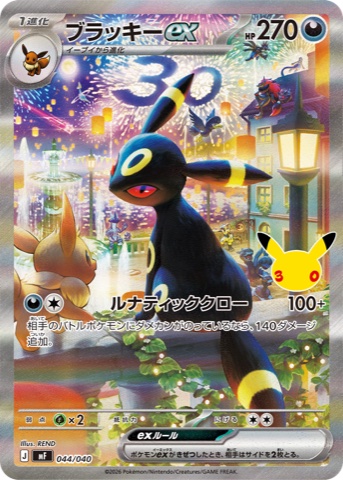 30th CELEBRATION Premium Deck Set Price in Japan: ¥18,000 vs ¥6,200
  Ninja Spinner Card Prices in Japan: Mega Greninja ex MUR at ¥59,800
  Abyss Eye Card Prices in Japan: Mega Darkrai ex MUR at ¥34,800
 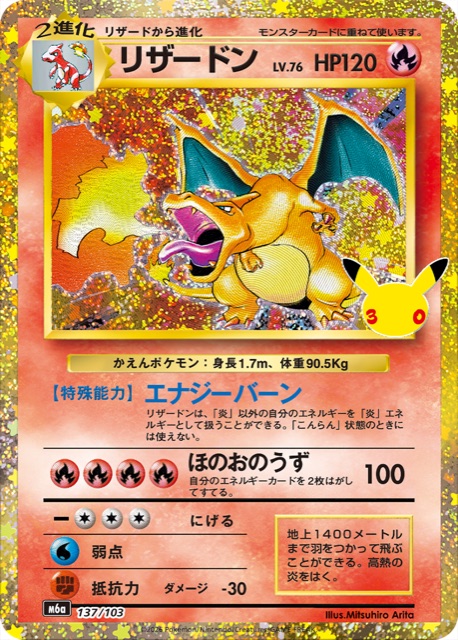 30th Celebration Classic Collection: Why Charizard & Lugia Doubled