Japanese Booster Box Shrink Wrap: Is 'Unopened' Sealed?
The Rundown
- 未開封 (mikaifū, 'unopened') and シュリンク付き (shurinku-tsuki, 'shrink attached') are two separate claims — a box whose factory film was cut off at a Japanese register is still, truthfully, 未開封.
- The gap is priced. On one Shibuya buyback shop's published table, all 37 boxes listed in both columns paid less without the shrink on September 9, 2026 — between 5% and 26% less, median about 14%.
- Mercari's own rules require a box listing to state that the box is 未開封 plus the pack and card counts. They say nothing about the shrink, so wrap state lives entirely in free text.
- SNKRDUNK, which inspects sealed boxes for a living, judges a shrink-on box from the outside only and states the box interior is outside its inspection scope. Nobody opens a wrapped box to check it.
- You can check a listing against the manufacturer: 30th CELEBRATION is ¥7,200 for 20 packs of 6 cards, ¥360 per pack, released September 16, 2026.
Want a real number on a specific card? We check what it's listed for in Japan today. Send a want list →
Contents
You’re looking at a Japanese booster box listing you can’t read, and the seller has written something about シュリンク that the machine translation renders as “shrink.” Two words are doing the work here and they are not synonyms: シュリンク付き (shurinku-tsuki) says the clear factory film is still around the box, while 未開封 (mikaifū) only says nobody has opened it. A box can be honestly described as 未開封 with the film already gone — and that gap is where the money goes. Here is how to read the rest of the vocabulary, and where reading stops working.
What does シュリンク付き mean on a Japanese booster box listing?
It means the seller says the transparent film the box shipped in is still on it. That’s the whole claim — it is a statement about one layer of packaging, made by the seller in free text, and it is not a statement about what’s inside.
Japanese sealed listings have built a surprisingly precise vocabulary around that film, because the market prices each state differently. Here is every term you will actually meet, what it literally says, and where it stops.
| Listing term | Reading | Literal sense | What it establishes | What it does not |
|---|---|---|---|---|
| シュリンク付き / シュリンクあり | shurinku-tsuki / shurinku ari | ”shrink attached” / “shrink present” | The seller says the clear factory film is still around the box | Whether that film is the original one, or what’s under it |
| シュリンクなし / シュリンク無し | shurinku nashi | ”no shrink” | The film is off. Very common and usually innocent | Whether the box beneath it was ever opened |
| ペリペリあり / ペリペリなし | peri-peri ari / nashi | collector slang for the box’s own perforated tear strip | Whether that perforated seal is still intact | Whether packs were reached through another face of the box |
| ミシン目未開封 | mishinme mikaifū | ”perforation unopened” | The shop-counter phrasing of ペリペリあり | Same limit as above |
| 未開封 | mikaifū | ”unopened” | The seller’s claim that nobody has opened it | Anything at all about the shrink |
| 新品未開封 | shinpin mikaifū | ”brand-new, unopened” | 新品 is about newness, not packaging | Nothing more than 未開封 does |
| 未サーチ / サーチ済み | mi-sāchi / sāchi-zumi | ”not searched” / “already searched” | The seller’s claim about whether packs were probed for contents | Nothing verifiable — and Mercari bans marketing packs on rarity odds |
| すり替え | surikae | ”swap, substitution” | The word used in platform warnings and buyer complaints | It is not a term an honest listing uses about itself |
Read the fourth column across, and the shape of the problem appears: every one of these is a seller assertion about packaging, and none of them is an assertion anybody has checked.
Is 未開封 the same as sealed?
No, and this is the single most expensive misreading an overseas buyer makes. 未開封 is a claim about opening; シュリンク付き is a claim about wrapping. Japanese stores routinely cut the film off at the register as an anti-resale measure, so a box can be genuinely, honestly 未開封 and have no shrink at all.
Mercari’s own listing rules make the asymmetry visible. Its trading-card guidance requires a box listing to state 「取引の対象となるボックスが未開封であることを、商品写真と商品説明それぞれに正確に記載する」 — accurately state in both the photos and the description that the box is unopened — along with the number of boxes, the packs per box and the cards per pack. There is no requirement to mention the shrink, and Mercari’s condition dropdown has no “sealed” option either: sellers pick from six wear grades starting at 新品、未使用. So wrap state is not a platform field. It is free text, or it is absent.
That is why Japanese sellers volunteer it in the title. Checked on Yahoo! Auctions on September 9, 2026, a search for ポケモンカード BOX シュリンクなし comes back full of two-part disclosures — 「ストームエメラルダ 1BOX シュリンクなし ペリペリあり」, 「アビスアイ … シュリンクなし ペリペリなし」, 「3BOX … ぺリぺリなし 箱なし シュリンクなし 未サーチ品」. The sellers are answering, in the title, the two questions the platform doesn’t ask.
⚠️ 未開封 alone is not a wrap claim
If a listing says 未開封 or 新品未開封 and never uses the word シュリンク, you have been told nothing about the film — and translation tools will render both as "unopened" or even "sealed," which quietly invents a claim the seller never made. Ask before you bid, don't assume, and don't pay a shrink-on price for a listing that only says 未開封.
What can you check against the manufacturer?
The configuration, and only the configuration — but that part is genuinely checkable, and it catches listings whose numbers don’t add up.
Take the box shipping this month. The Pokémon Card Game 30th anniversary site gives the MEGA expansion pack 「30th CELEBRATION」 a 希望小売価格 of ¥360 including tax, 内容物 of six holo cards per pack, and a release date of September 16, 2026, with one basic Energy card guaranteed in every pack. The Pokémon Center Online box listing gives the rest: ¥7,200 including tax, 1BOX=20パック, 1パック=カード6枚入り, 13.7 × 13.9 × 3.6 cm, 236 g. We break that product down in 30th CELEBRATION: box price and pack count, and the wider point — that pack counts live on store listings rather than set pages — in Japanese booster box guaranteed pulls, packs and odds.
Neither official page says one word about shrink wrap. There is no published manufacturer specification for the film: no stated thickness, no seam position, no weight. That absence matters more than it looks, and it is the reason the next section ends the way it does.
Can you tell a resealed box from listing photos?
Largely no, and anyone selling you a five-point photo checklist is selling confidence rather than method. The people who inspect sealed boxes professionally don’t claim to see inside one either.
The clearest published statement of what a trained inspection can and cannot establish comes from SNKRDUNK, the Japanese marketplace that authenticates sealed product before it reaches the buyer. Its trading-card quality guideline splits boxes into two tracks, and the split is instructive:
🎞️ シュリンクあり — judged from outside
- Graded on the film and the box exterior only
- States outright that anything inside the box is outside the inspection's scope
- Tears or splits under 2 cm across pass as normal handling; 2 cm or more fails
- Fails if the film's state differs from how it left primary distribution
- A perforation that has crept open under intact film still passes
📦 シュリンクなし — physically opened
- Accepted as new, but the box is opened from both side faces to count contents
- Cancelled if the perforation was already opened, the glued face was opened, or packs show opening marks
- A perforation gap under 1 cm passes; 1 cm or more fails
- Because it was opened to verify, resale is required to be listed as loose packs
- Products that never ship with film — ONE PIECE among them — are verified by cutting the factory tape instead
Read the left column again. The strongest verification in this market, performed in person by people holding the object, deliberately does not open a wrapped box — it compares the wrap against what wraps normally look like. From a photograph, in another country, you are attempting a weaker version of that same exterior comparison.
So, our position on the detection folklore. Weight tolerances, heat-gun texture, seam placement, “the official wrap is always” claims: we could not attach any of it to a primary source, and since no manufacturer publishes a wrap specification, there is nothing authoritative to measure such a test against. That doesn’t make those observations worthless to people who handle hundreds of boxes. It means we could not verify them, so we won’t print them as a checklist — and neither should the page that told you.
🗼 What we can do about this
The obstacle this article just described is a language one: the wrap state of a Japanese box lives in free text you can't read, and the follow-up question that would settle it has to be asked in Japanese. That part is fixable. Send us the box you're after and we check the live Japanese listings — Mercari, Yahoo! Auctions, shop stock — and send back a free report with the ones we'd pick, the yen price, exactly what each listing's Japanese wording claims about the film and the perforation, where it is silent, and an all-in estimate including proxy fees and shipping to your country. You buy directly from the links. What we can't do is see inside a sealed box, because nobody can without opening it — our job is finding the best way to buy it from Japan and telling you, which here means telling you which listings actually state what you're paying for.
Get a free report on the box →
The Tokyo Sourcing Desk is our own free service. Editorial policy.
How much does シュリンクなし actually cost you?
Consistently less, by a margin that is set per-set rather than by a rule. The cleanest public evidence is a buyback table, because trade-in shops have to put a number on the difference every day.
買取レッド, a card shop in Shibuya, publishes its Pokémon box trade-in prices in two parallel columns — シュリンクあり・未開封 and シュリンクなし・ミシン目未開封 — which is itself a useful confirmation that the trade treats these as two different products. Checked on September 9, 2026:
| Box | シュリンクあり (offer) | シュリンクなし・ミシン目未開封 (offer) | Difference |
|---|---|---|---|
| ストームエメラルダ (Storm Emeralda) | ¥12,000 | ¥9,000 | −25% |
| インフェルノ X (Inferno X) | ¥16,200 | ¥12,000 | −26% |
| 熱風のアリーナ (Neppū no Arena) | ¥18,600 | ¥16,000 | −14% |
| 超電ブレイカー (Chōden Breaker) | ¥30,500 | ¥27,000 | −11% |
| VSTARユニバース (VSTAR Universe) | ¥29,000 | ¥27,500 | −5% |
Across all 37 boxes the shop quoted in both columns that day, not one paid the same or more without the film; the discount ran from about 5% to about 26%, with a median near 14%. Two caveats worth keeping: these are what a shop offers to buy at, not what a box resells for, and the page labels them reference prices that lag its live quotes. The direction is the durable part. The number is the part you re-check.
The practical read is not “avoid シュリンクなし.” It is that a shrink-off box should cost visibly less, and a listing pricing one at shrink-on money is asking you to pay for evidence it isn’t providing.
What happens if the box isn’t what the listing said?
Three separate rulebooks apply, and none of them was written with a sealed box in mind.
The Japanese platform. Yahoo! Auctions’ detailed regulations prohibit 事実と異なる表示 — displaying facts differently from the item — naming color, size, model number and 商品の状態 explicitly, and its support pages tell a buyer whose item differs from the description not to press 受け取り連絡 and to raise it with the seller first. Mercari says the same in its own shape: contact the seller before 受取評価, because once the transaction completes it can’t be cancelled.
The proxy. Buyee’s published return policy is unusually direct about the sealed case: items whose contents cannot be confirmed without opening the package are not eligible for compensation, because Buyee cannot determine during inspection whether the item is wrong. It states separately that it does not carry out authenticity verification. Its inspection catches a wrong item, a wrong quantity and shipping damage — and does not extend to a box’s contents.
The manufacturer. The official Pokémon Card support guideline covers products bought in normal retail form at general retailers, by customers who live in and purchased in Japan, with an original receipt naming date, product, amount and store, filed within two weeks. It explicitly excludes items obtained via auction sites and flea-market apps. A secondhand import misses on several counts at once.
✅ Read this much before you bid
- Does the listing use the word シュリンク at all? If not, the wrap state is unknown, whatever 未開封 seems to promise.
- Is there a second term — ペリペリ or ミシン目? On a shrink-off box that is the claim that actually carries information.
- Do the counts match the store listing? Packs per box and cards per pack are published; a listing that disagrees is wrong about something.
- Is the price consistent with the state claimed? Shrink-on money for a shrink-off box is the mismatch to walk away from.
- Are there photos of the box's opening faces and the perforation, not just the front? They can't prove much, but their absence on an expensive box is a choice.
- Did you ask, in Japanese, before bidding? Our guide to asking Japanese sellers questions has the phrasing.
For loose single cards the picture is different and considerably better, because a card can be inspected — the physical tells and the verification routes are in our guide to spotting fake Japanese Pokémon cards.
The short version
Sealed product is the one category where you’re buying a claim rather than a verified object. What you can do is read the claim precisely: 未開封 and シュリンク付き answer different questions, ペリペリ and ミシン目 answer a third, and a listing that skips them has told you less than it appears to. Check the counts against the manufacturer’s own page, expect a shrink-off box to be priced like one, and put your scrutiny into which listing you buy from — because once the box is in your hands, the only way to check it is to destroy the thing you paid for.
Frequently asked questions
How much cheaper is a シュリンクなし Japanese booster box?
Less than a shrink-on box, consistently, but the size of the gap is per-set and you have to check it live. As one dated reference: on the Shibuya shop 買取レッド's published trade-in table on September 9, 2026, every one of the 37 boxes quoted in both columns paid less without the shrink — Storm Emeralda ¥12,000 with, ¥9,000 without, and across the table the discount ran from about 5% to about 26%, median roughly 14%. Those are trade-in offers at one shop, not resale prices, and the page itself calls them reference figures, so treat the direction as reliable and the number as something to re-check.
Does シュリンクなし mean the box has been tampered with?
No, and treating it that way will make you overpay. Japanese stores widely cut the film off at the register precisely to make a box harder to resell, so an enormous number of perfectly honest boxes have no shrink. What シュリンクなし does mean is that one layer of evidence is gone, which is why the market prices it lower and why the next question — whether the box's own perforated seal is intact — starts to matter.
Can Buyee or another proxy check whether my sealed box is genuine?
No. Buyee's published return policy states that items whose contents cannot be confirmed without opening the package are not eligible for compensation, because Buyee cannot determine during inspection whether the item is wrong, and it says separately that it does not conduct authenticity verification. A sealed box is the textbook case of both. Proxy inspection catches wrong item, wrong quantity and shipping damage.
What is サーチ済み on a Japanese card listing?
サーチ (sāchi, 'search') is the practice of identifying what is inside a sealed pack without opening it; サーチ済み means already searched and 未サーチ means not searched. Mercari prohibits selling packs marketed with wording that implies a raised chance of rare cards — its help pages name 「サーチパック」 as a banned expression — and also bans listings where the contents have been swapped or the unopened status falsified. A listing that volunteers 未サーチ is answering a question the platform has already taken a position on.
If a secondhand box is short cards, can I claim from The Pokémon Company?
Realistically no. The official Pokémon Card support guideline limits aftercare to products sold in normal retail form at general retailers, requires that you live in and bought in Japan, requires an original receipt showing date, product, amount and store, and asks for the claim within two weeks of purchase. It explicitly excludes purchases made through auction sites and flea-market apps. A box bought secondhand through a proxy fails several of those at once.
 Ninja Spinner Card Prices in Japan: Mega Greninja ex MUR at ¥59,800
  Abyss Eye Card Prices in Japan: Mega Darkrai ex MUR at ¥34,800
 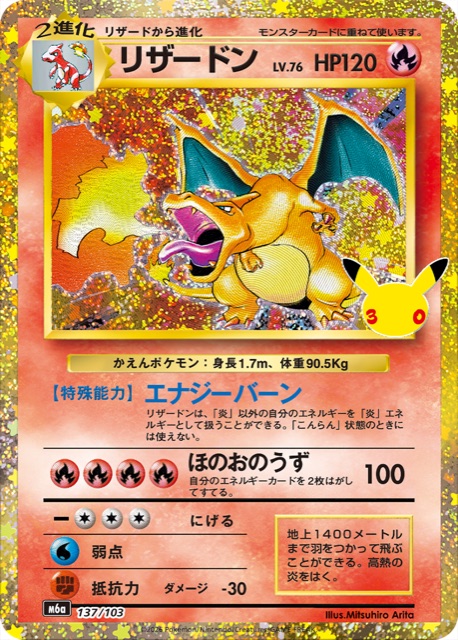 30th Celebration Classic Collection: Why Charizard & Lugia Doubled
  30th CELEBRATION Prices in Japan: Box ¥25,000, Top Single ¥24,800