Pokémon Card Store Face Recognition: One Entry Per Person, Per Day
The Rundown
- One entry and one entry ticket per person per day, checked by facial recognition, at five Pokémon Card Store pop-ups open July 31–August 16, 2026.
- The face check applies to everyone of elementary-school age and up. Preschool children are exempt from the scan but cannot enter without a guardian.
- Chofu PARCO is the only Tokyo-area location. The other four are inside AEON Malls in Miyagi, Aichi, Hiroshima, and Fukuoka prefectures.
- Hours are 10:00–18:00 on weekdays and 10:00–19:00 on weekends and holidays, with July 31, August 10, and August 12–14 all running to 19:00.
- Accepting the face check is a condition of entry, and stepping out without telling staff — or after paying — ends your visit for that day with no re-entry.
Need something from Japan? Send a want list, get a free sourcing report. Send a want list →
Contents
- Can I get into a Pokémon Card Store more than once a day?
- The five Pokémon Card Stores: where and when
- What the system checks, and what it keeps
- The two ways to burn your one visit
- Why this closes a channel rather than narrowing it
- If you are going: how to plan the one visit
- The free events, and who can actually join them
- What to do if you are not in Japan in August
If you built an August trip to Japan around the Storm Emeralda (ストームエメラルダ) launch, one line buried in a July 24 update just rewrote your itinerary. The five Pokémon Card Store (ポケモンカードストア) pop-ups that open today, July 31, 2026, check every customer of elementary-school age and up with facial recognition, and cap them at one entry and one entry ticket per person, per day. Not per group, not per receipt. Per face.
Can I get into a Pokémon Card Store more than once a day?
No. The Pokémon Card Game official notice states that entry and receipt of an entry ticket (入店整理券) are limited to one per person per day, verified by a facial recognition system both at the door and at the moment the ticket is handed over. If the system detects the same person entering a second time or taking a second ticket and shows an alert on screen, the notice says entry is refused uniformly on the basis of the system’s determination.
That is the whole story for planning purposes. Everything below is the detail you need to not waste the one visit you get.
The five Pokémon Card Stores: where and when
All five opened Friday, July 31, 2026 and run through Sunday, August 16, 2026. Four sit inside AEON Malls; one is in a department store in western Tokyo.
| Store | Prefecture | Address | Floor |
|---|---|---|---|
| Pokémon Card Store in AEON Mall Natori (イオンモール名取) | Miyagi | 5-3-1 Morisekinoshita, Natori | 3F AEON Hall |
| Pokémon Card Store in Chofu PARCO (調布PARCO) | Tokyo | 1-38-1 Kojimacho, Chofu | 1F event space |
| Pokémon Card Store in AEON Mall Higashiura (イオンモール東浦) | Aichi | Aza Asahi 13-2, Oaza Ogawa, Higashiura, Chita District | 1F Central Court |
| Pokémon Card Store in AEON Mall Hiroshima Fuchu (イオンモール広島府中) | Hiroshima | 2-1-1 Ozu, Fuchu, Aki District | 3F AEON Hall |
| Pokémon Card Store in AEON Mall Chikushino (イオンモール筑紫野) | Fukuoka | 434-1 Ryumyoji, Chikushino | 1F West Court |
Hours are identical at all five:
| Day | Hours |
|---|---|
| Weekdays | 10:00–18:00 |
| Weekends and public holidays | 10:00–19:00 |
| Exceptions — Jul 31 (Fri), Aug 10 (Mon), Aug 12 (Wed)–Aug 14 (Fri) | 10:00–19:00 |
Read that exception row as a crowd forecast. The days The Pokémon Company chose to extend are launch day and the Obon travel week, which is when domestic demand peaks and when a visitor from abroad is most likely to be in the country. If your dates are flexible at all, the plain weekdays between August 3 and August 7 are the quiet side of the window.
For anyone whose trip is Tokyo-only, note that Chofu is the single option, and it is not the Ikebukuro-and-Nihonbashi circuit most visitors run. That circuit is a different set of shops, covered in our guide to Tokyo’s Pokémon card stores and the Pokémon Center locations — the pop-ups are a separate, temporary channel, not a branch of those.
What the system checks, and what it keeps
The stated purpose in the notice is threefold: providing a safe shopping environment for all customers, crime prevention, and enforcing the entry and purchase rules. The notice says the store makes entry and purchase-limit decisions using the system’s determination as its standard — though it does not publish what the purchase limits themselves are.
Two data points are collected from each covered customer: entry count and facial image data. The notice says both are managed strictly and appropriately within the scope needed for that purpose, and deleted promptly after a set period, with The Pokémon Company’s privacy policy governing the rest. It does not state how long that period is.
💡 The age line, and the one exemption
Face recognition covers customers of elementary-school age and above. Preschool children are outside it and can walk in alongside you without being scanned — but the notice is equally clear that a preschool child may not enter alone, and must be accompanied by a guardian.
Staff enforcement sits on top of the software rather than being replaced by it. The notice says staff may individually approach anyone observed entering multiple times, and that entry can also be refused for any other conduct judged inappropriate for the store’s safety or smooth operation. It closes by noting the rules may change without prior notice.
The two ways to burn your one visit
⚠️ Consent is the ticket, and the door only swings one way
Accepting the facial recognition system and the entry rules is stated as a condition of use — decline the scan or the rules and the notice says you get neither entry nor an entry ticket. And once you are inside, leaving without speaking to a staff member first means no re-entry, and leaving after you have paid means no re-entry either. If you flew in for this and stepped out for a drink without telling anyone, that is the day over.
That second rule is the expensive one, because it looks like ordinary retail politeness and is not. The notice puts the burden on you to find a staff member and get acknowledged before stepping out for something as routine as a restroom trip. It also treats checkout as terminal: pay, and your visit is finished for the day whether or not you meant it to be.
Why this closes a channel rather than narrowing it
The interesting thing about a biometric gate is what it does to every workaround at once. A per-purchase limit can be spread over multiple trips. A per-account limit can be spread over multiple accounts. A per-person-per-day limit verified by face has no such surface: you cannot delegate it, you cannot stack it, and you cannot run it from a hotel room in another country. It is enforced by physics — being a specific body, in a specific building, once.
For an overseas collector, that puts these five stores in the same bucket as the Japanese address requirements we track on the JP Lottery Tracker, but for a different reason. The lottery routes exclude you on paper, through terms of service. This one excludes you by geography, and would exclude a Tokyo resident on their second visit of the day just as firmly.
🗼 What we can do about this
Nothing about the one-entry-per-person-per-day rule, and we are not going to pretend otherwise — a face check is not something a proxy can absorb on your behalf, and anyone telling you they can stack entries is describing a rule violation. What being in Japan does change is everything outside that door: regular Japanese retail, restock windows, and the Japanese secondary market, which all require being in the country at all before price or availability even becomes a question. Name a specific product or card and the desk checks what is genuinely listed here, then sends back a free report with the listings we would pick, the yen price, condition notes, and an all-in estimate including proxy fees and shipping to your country. You buy directly from the links; our job is finding the best way to buy it from Japan and telling you.
The Tokyo Sourcing Desk is our own free service. Editorial policy.
If you are going: how to plan the one visit
✅ Before you get in line
- Pick the day, not the hour. A second visit is a second calendar day, so the choice is which day you spend, not when you come back.
- Check the hours for that exact date. Weekdays close at 18:00; July 31, August 10, and August 12–14 run to 19:00 like the weekends.
- Split a group across stores, not across times. Each person carries their own one entry and one ticket; two people at Chofu on the same day is two entries, not one entry twice.
- Handle food and restrooms before you go in. Stepping out without staff acknowledgement ends the visit.
- Pay last. Checkout is the exit, and re-entry after paying is refused.
- Be ready to consent at the door. There is no described alternative to the face scan, and declining means no entry ticket either.
We have not visited any of the five stores, and the official notice publishes nothing about stock levels, per-product purchase limits, prices, or how the entry tickets are distributed across the day. Anyone telling you a specific ticket handout time or a specific box allocation is not reading it off this page. What the notice does say about the product mix is broad: Pokémon Card Game items, mainly expansion packs and related products, plus Pokémon Center original goods, some plush toys and sundries.
The free events, and who can actually join them
Two in-store events run at all five locations, with identical terms.
Both are free, and both are capped — the notice says reception may close early once capacity is reached, and that arriving more than five minutes after the assigned meeting time can cost you the slot to whoever is standing there.
What to do if you are not in Japan in August
Treat the pop-ups as closed to you and stop optimizing around them. They are one of the few Japanese retail channels where distance is not a paperwork problem you can solve with an address or a service — it is the whole gate. Storm Emeralda itself is not gated that way: it goes on general sale the same day the stores open, at ¥200 a pack, and Japanese singles reach the secondary market within hours of a release. Our Storm Emeralda set guide has the contents and the routes that do work from abroad, and the lottery mechanics piece covers which official channels will and will not take an overseas buyer at all.
The broader signal is worth filing away. The Pokémon Company bolted a biometric layer onto a temporary pop-up seven days before the doors opened — the store notice had been up since December 2024, and the face recognition section arrived in a July 24, 2026 update to it — and framed it as fairness rather than security. If it works there, the model has an obvious next home in the permanent stores and the event circuit — which would make “one person, one visit” a thing you plan Japanese card trips around, not a footnote on five summer pop-ups.
Frequently asked questions
What does it cost to get into a Pokémon Card Store?
Nothing. Entry is free, the entry ticket is free, and both in-store events — the Pokémon Card Game Classroom and the Step-Up Classroom — are listed as free with a promo card or a Trainer's Pack as a participation prize. You pay only for what you buy. The official notice publishes no admission fee, no reservation fee, and no paid priority lane, so anyone offering you paid early access is not selling something the store sells.
Does the facial recognition apply to foreign visitors too?
The notice draws the line by age, not nationality or residence: everyone of elementary-school age and above is subject to the check. There is no tourist exemption written into it, and no alternative ID-based route is described. If you decline the scan, the notice says entry and the entry ticket are both refused.
Can my partner get an entry ticket for me while I wait outside?
No. The limit is one entry and one entry ticket per person per day, and the face check happens both at entry and when the entry ticket is handed over. A ticket is tied to the person whose face was scanned to receive it, so a second person collecting on your behalf is spending their own one ticket for the day, not adding one to yours.
What happens to my face data after the visit?
The Pokémon Company states it collects the customer's entry count and facial image data, manages it within the scope needed for the stated purpose — a safe shopping environment, crime prevention, and enforcement of the entry and purchase rules — and deletes it after a set period. The notice does not publish the length of that period; it points to Pokémon's privacy policy for the details of how personal information is handled.
Can I leave the store to use the restroom and come back?
Only if you tell staff before you go. The notice is explicit that leaving without speaking to a staff member means no re-entry, and that leaving after paying also means no re-entry regardless. Eat first, use the restroom first, and treat the moment you pay as the end of your visit for the day.
 ONE PIECE ST-37 & ST-38 Baroque Works Start Decks: Dec 19, ¥1,320
 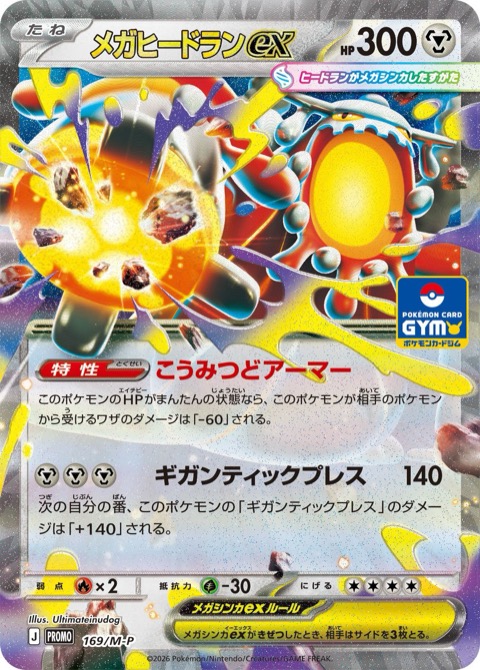 Mega Heatran ex Promo: Japan's Promo Card Pack Vol. 6 From Nov 1
  Champions League 2027 Chiba: Entry Closes Oct 16 for Overseas Players
  Pokémon Card Shows in Japan 2027: Events Visitors Can Actually Attend